

Annual report 2025
Patient Impact Summary for 2025
During 2025 year CASERS provided
13 188
consultations through the work of mobile medical centers and open telemedical centers
7 845
people living in frontline and de-occupied regions received assistance
28
telemedical centers were opened in frontline regions during the entire period of work
Mobile medical centres
In 2025, CASERS mobile medical teams operated in the Kherson, Mykolaiv, and Dnipropetrovsk regions.
In addition, mobile medical teams provided home visits for patients with limited mobility
Overall results in 2025:
10 000
medical consultations delivered
6 500
provided assistance
to people


Telemedicine centres

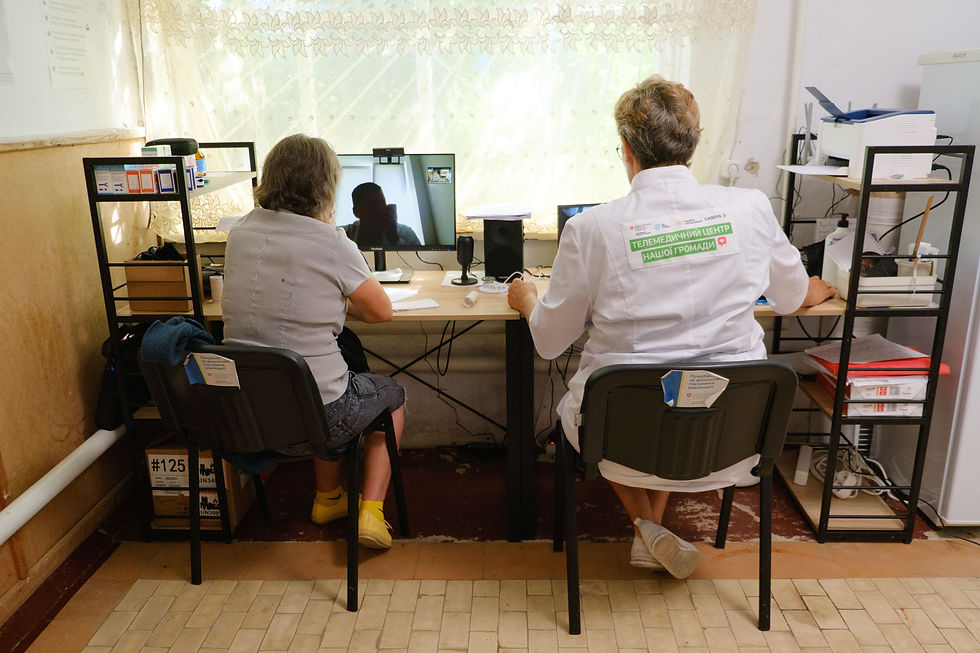

In 2025, CASERS significantly expanded its network of telemedicine centers across three regions of Ukraine: Dnipropetrovsk, Kherson, and Mykolaiv regions.
As the security situation along the frontline deteriorated throughout 2025, telemedicine became the primary means of access to medical specialists for residents of remote communities.
Overall telemedicine results in 2025:
13
telemedicine centers opened
2 500
telemedicine consultations conducted
1 300
medical assistance provided to people
Telemedicine centers are operating in:
Mykolaiv Region: Shyroke, Tsentralne, Suvore, Tamaryne, Murakhivka
Dnipropetrovsk Region: Hrushivka, Ukrainka, Kozatskyi Kut, Kamianka, and a representative office in Chervona Kolonia
Kherson Region: Kherson (Tavriiskyi District), Sahaidachne, Davydiv Brid

Through telemedicine centers,
patients were able to:
Receive free consultations with medical specialists across all fields
Review and interpret test results or obtain referrals for additional diagnostics
Receive treatment prescriptions and/or adjustments to ongoing treatment
Obtain referrals for further examinations and hospitalization
Undergo rapid blood tests, ECGs, dermatoscopy, otoscopy, and digital auscultation (stethoscopy)
Expanded hospital partnerships in telemedicine:
-
Rivne Regional Children’s Hospital
-
Rivne Municipal Non-Profit Enterprise “Rokytne Multidisciplinary Intensive Care Hospital”
-
Sumy Regional Children’s Clinical Hospital
-
Vinkivtsi Central District Hospital
-
Chernivtsi Municipal Non-Profit Enterprise “City Children’s Polyclinic”
-
Chernivtsi Municipal Non-Profit Enterprise “City Polyclinic No. 2”

Implemented projects


Project: "Improving access to comprehensive health services for vulnerable conflict-affected populations, both host populations and internally displaced persons, in severely affected areas"


Special events
“This is a safari on people” — Angelina Jolie on her visit to Ukraine
During her visit to Ukraine, Angelina Jolie publicly drew international attention to the humanitarian challenges faced by civilians in frontline regions.


Visit by Ukraine’s Health Cluster leadership and WHO representatives
The leadership of the National Health Cluster of Ukraine and representatives of the World Health Organization (WHO) visited a CASERS mobile medical outreach mission in the Kherson region.
The delegation included:
-
Penn Amaa, National Health Cluster Coordinator of Ukraine;
-
Sviatoslav Linnikov, WHO Southern Hub Coordinator.
Presentation of the telemedicine model to representatives of the Government of Ukraine
The CASERS team presented its telemedicine operating model to the First Deputy Prime Minister of Ukraine Yuliia Svyrydenko and the Minister of Health of Ukraine Viktor Liashko during the opening of a new telemedicine center in the Kherson region.


CASERS’ experience presented at the UN Assembly in Geneva
During an event held as part of the United Nations Assembly in Geneva, Médecins du Monde France presented to the international community the experience of implementing telemedicine centers in Ukraine, including the contribution of CASERS.
The Times correspondent joins the mobile team’s visit
ANTHONY LLOYD, a correspondent for the world-renowned The Times, joined the visit to the CASERS mobile medical center and covered the activities of our organization. Anthony spends the whole day talking to patients, visitors to the center, nurses and medical workers. This publication is a significant contribution to informing the English-speaking Western population about the real disruption in the frontline regions.
Article — “Meet the nurse who resists drone attacks to deliver aid to Kherson”


Vehicles and Mobile Infrastructure
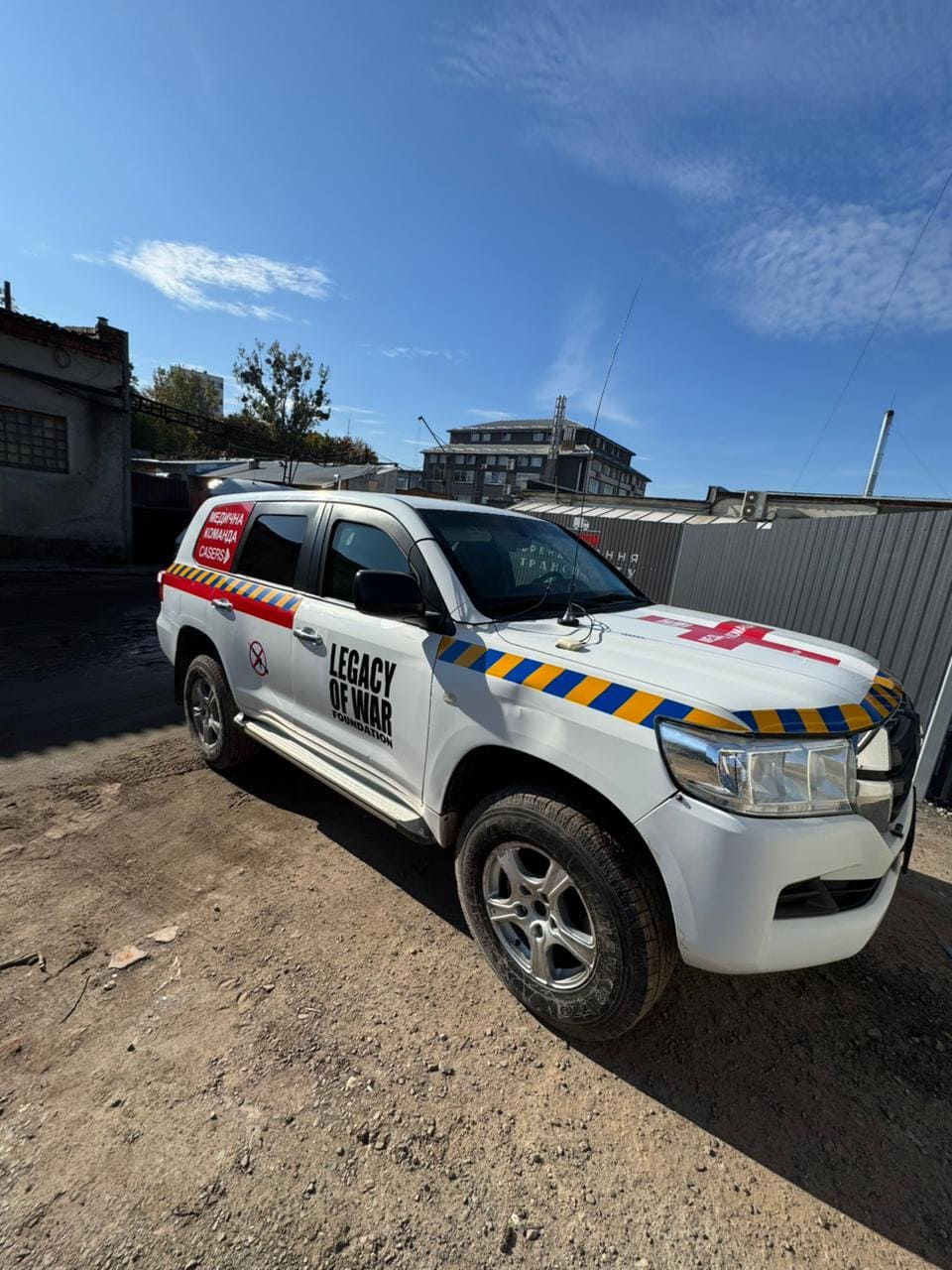
In 2025, CASERS received new vehicles and mobile assets that significantly strengthened our capacity to deliver medical and humanitarian assistance:
-
Ford Ranger (2022) provided by our partners Legacy of WAR;
-
a medical trailer “Svitlytsia Zdorovia” (Health Hub), enabling on-site medical services in remote communities;
-
two armored vehicles — Toyota Land Cruiser 200 and Toyota Land Cruiser Medevac, enhancing team safety and evacuation capabilities in high-risk areas.
These assets expanded our operational reach and improved the safety, mobility, and effectiveness of our field teams in frontline and hard-to-reach locations.


New Diagnostic Equipment from Partners and Friends
In 2025, CASERS received modern diagnostic equipment that significantly expanded the capacity of our mobile medical teams.
HemoScreen 200 Hematology Analyzer — provided by Legacy of WAR. The device enables rapid extended blood testing directly during mobile team operations, supporting timely clinical decision-making in field conditions.
.jpg)
New frequency analyzers
These devices are passive early warning systems that allow you to detect the presence of drones in real time and make informed decisions: stop or postpone a humanitarian departure, change the route, or take cover.


Safety and Security Trainings
Drone Awareness Training — Safer Access Ukraine
The team was trained on how to act during drone attacks, understand the behavior of different types of unmanned aerial vehicles (UAVs), their capabilities and limitations, and how to remain calm under attack while minimizing unnecessary risks.


Safety and Emergency Response Training for Partner Organizations (“Capable and Strong” Program)
The team practiced skills in controlling massive bleeding, learned response algorithms for cardiopulmonary resuscitation (CPR) and the use of automated external defibrillators (AEDs), and addressed emotional self-regulation, mine safety, and evacuation procedures.


Hostile Environment Individual Safety Training (HEIST) — INSO
During the training, the team learned how to identify and assess security risks and vulnerabilities, communicate effectively in high-risk environments, provide basic psychological first aid, and act appropriately both individually and as a team in dangerous situations. The training also reinforced skills in providing first (pre-medical) aid.


First Aid Training — Nonviolent Peaceforce (Mykolaiv)
In November, CASERS team together with nurses from telemedicine centers completed first aid training focused on the control of massive bleeding, with realistic scenario-based practical exercises.


Events & Conferences


Ukraine Expert Conference: Civil Society, Resilience & Reconstruction
In July 2025, Yevhen Ursalov, Founder and Head of CASERS, spoke at the Ukraine Expert Conference: Civil Society, Resilience & Reconstruction in Berlin, organized by the European-Ukrainian Bridge (EUB).
During his presentation, he shared CASERS’ practical experience in implementing telemedicine solutions in Ukraine’s frontline and de-occupied communities.
About the platform:
The European-Ukrainian Bridge connects volunteers and activists across Europe who have supported and continue to support Ukraine during Russia’s war of aggression, with the goal of strengthening the country and supporting its people.
About us in the media

With the support of
%202.png)


%201.png)
How to support us in providing medical help civilians in frontline and de-ocuppited areas?
Provide medical equipment
We're always looking for ways to provide more needed medical services. For this, we need:
— portable ultrasound;
— portable blood analyzer;
— fluorography machines;
— ophthalmologist's equipment;
— mobile dental clinic / portable dentist equipment, etc.
We're open to different opportunities to add new examination methods we can use on the spot during our missions.
Donate for the immediate needs
Support us one time to help cover current needs: fuel, consumables, medicine, etc.
Provide the vehicle
We're looking for an off-road vehicle for our missions. The roads on de-occupied territories are poor, and our ambulances constantly need repairs. So we need a spare reliable transport to reach people constantly.
Support our sustainability
We are looking for sustainable funding for the organization to continue its work, save health and lives.
Do you have other ideas?
Don't hesitate to contact us If you have other ideas on how to provide more quality services for people in de-occupied territories.
Please email us at


